
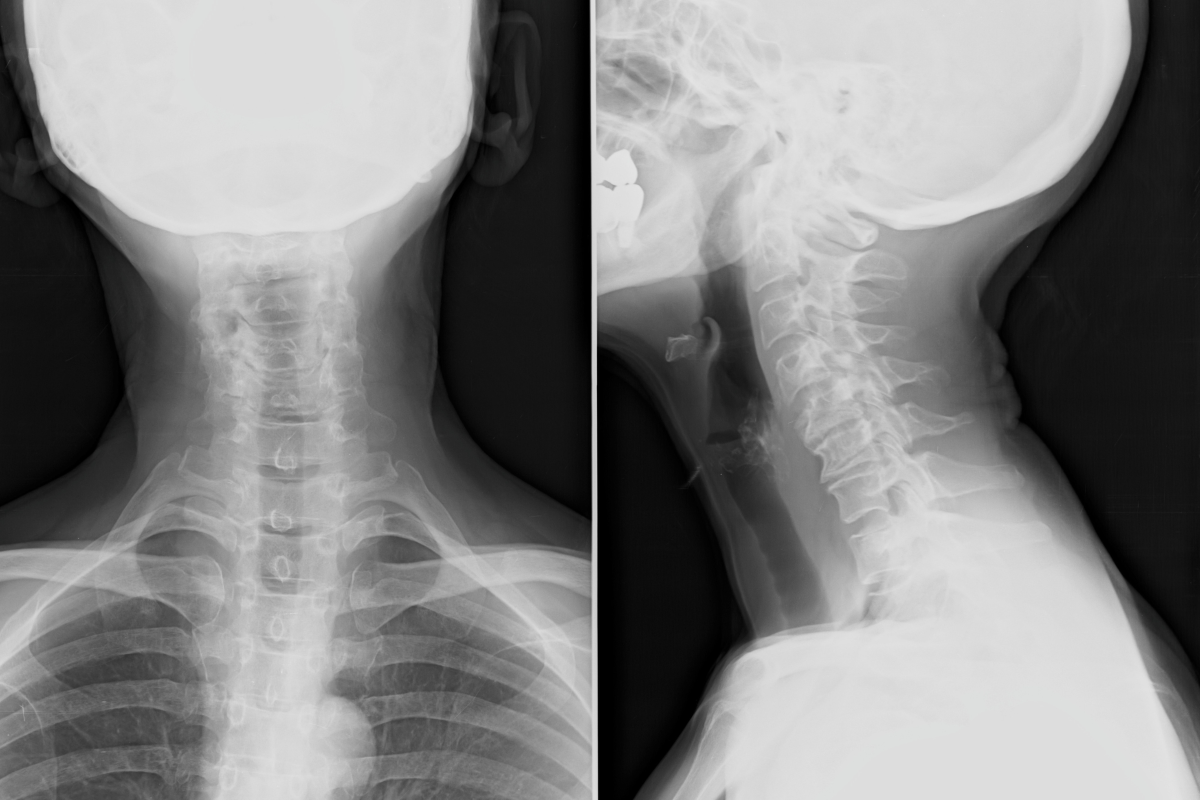
Upper cervical chiropractic care is something more and more people are searching for—but what exactly is it?
Upper cervical chiropractic isn’t simply a fancy term for chiropractic care for the neck. It is a specific approach to analyzing and adjusting the uppermost area of the spine, particularly the atlas (C1) and axis (C2) vertebrae.
This area is unique because of its close relationship with the skull, brainstem and spinal cord, as well as the tremendous amount of movement that occurs here. Upper cervical chiropractic focuses on identifying dysfunction or misalignment in this area and using precise adjustments to help improve spinal and nervous system function.
Almost 100 Years of History
Although upper cervical chiropractic may sound new, its roots go back nearly 100 years.
Dr. B.J. Palmer, the son of chiropractic founder Dr. D.D. Palmer and an important figure in the development of the chiropractic profession, devoted a significant part of his career to studying the upper cervical spine.
In the early 1930s, Palmer began teaching an approach that became known as Hole-in-One (HIO) chiropractic. His theory was that a significant spinal problem often originated in the upper cervical spine, particularly around C1 and C2, and that dysfunction elsewhere in the spine could sometimes develop as the body compensated for that primary problem.
Palmer and his colleagues developed specialized ways of analyzing and adjusting the upper cervical spine, including techniques such as toggle recoil and the use of the knee-chest table.
The idea was simple: rather than adjusting every area of the spine simply because it appeared out of alignment, identify the area creating the greatest interference and make a specific adjustment there.
Upper Cervical Care Today
Almost a century later, chiropractors have continued to research, refine and expand upon early upper cervical work.
Different upper cervical systems have developed over the years, including Grostic, NUCCA, Atlas Orthogonal and Blair, among others. While their methods of analysis and adjusting vary, they share an emphasis on precision and the relationship between the upper cervical spine and the rest of the body.
Technology has changed dramatically as well. Depending on the technique and practitioner, modern upper cervical chiropractors may use tools such as digital X-rays, cone-beam CT imaging and other forms of objective assessment to better understand a patient’s individual anatomy and spinal alignment.
The goal is not simply to “crack a neck.” It is to determine where, when and how an adjustment should be made—and when an adjustment may not be necessary.
“That Was It?”
One of the biggest surprises for patients experiencing an upper cervical adjustment for the first time is how gentle it can be.
Many upper cervical techniques do not involve the forceful twisting or rotation of the neck that people sometimes associate with chiropractic care. The adjustment may be quick, controlled and surprisingly subtle.
One of the most common things I hear after someone’s first upper cervical adjustment is:
“That was it?”
My response is usually:
“That was everything.”
The goal isn’t to create the biggest movement, the loudest sound or the most dramatic adjustment. The goal is to provide the appropriate input, in the appropriate place, at the appropriate time.
Sometimes less really is more.
Why Focus So Close to the Brain?
Your nervous system plays a central role in coordinating virtually everything your body does.
Your brain communicates with your body through the spinal cord and an incredibly complex network of nerves. The upper cervical spine surrounds and protects an important portion of this neurological system while also allowing your head and neck to move.
This is one reason upper cervical chiropractors place so much emphasis on this relatively small area of the spine.
Rather than thinking about chiropractic simply as a way of chasing individual aches and pains, upper cervical care encourages us to look at how the spine is functioning as a whole and how the body is adapting.
How We Practise Upper Cervical Care
At our office, upper cervical chiropractic is an important part of how we care for our patients, but it isn’t the only thing we do.
We assess each patient individually and adjust other areas of the spine when indicated. Depending on the person and what we find, techniques used in our office may include:
- Toggle recoil
- Knee-chest upper cervical adjusting
- Tonal Integrative Chiropractic (TIC)
- Thompson Technique
- Instrument-assisted adjusting
- Other gentle, age-appropriate chiropractic techniques
There isn’t one adjustment that is right for everyone.
Our goal is always to use the least amount of force necessary while being as specific as possible.
This approach also allows us to adapt care for people at many different stages of life—from children and teenagers to adults, pregnant women and seniors.
Specific. Gentle. Intentional.
Upper cervical chiropractic isn’t new. What has changed over the past century is our ability to assess patients, understand anatomy and biomechanics, and make increasingly precise clinical decisions.
For us, upper cervical care comes down to three words:
Specific. Gentle. Intentional.
We don’t believe an adjustment needs to be forceful to be meaningful. And we don’t believe every bone needs to be adjusted at every visit.
We want to determine what your body needs, make the most appropriate adjustment, and then give your body an opportunity to respond.
If you’re curious about upper cervical chiropractic care, we’d be happy to talk with you about whether our approach may be appropriate for you. And if you don’t live near our office, we’re always happy to help you look for an upper cervical chiropractor in your area.